fb-pixel

Automotive CRM Software for Car Dealerships

Manage dealership leads, customer conversations, follow-up, appointments and sales opportunities from one connected platform.

SimpSocial automotive CRM software brings lead management, messaging, calling, automated follow-up, AI engagement and appointment scheduling together so dealership teams can spend less time working across disconnected systems and more time engaging active opportunities.

Whether you operate an independent dealership, franchise store, BDC or dealer group, SimpSocial gives your team a clearer way to manage customer activity from the first inquiry through appointment, sale and future follow-up.

What Is Automotive CRM Software?

Automotive CRM software is customer relationship management software designed around the sales and communication needs of car dealerships.

It helps dealerships organize customer information, capture and manage leads, track conversations, schedule follow-up, book appointments and monitor sales opportunities as shoppers move through the buying journey.

Unlike a general CRM, an automotive CRM needs to support dealership-specific processes such as:

  • Website and vehicle inquiries
  • Third-party automotive lead sources
  • Phone, SMS and email conversations
  • Vehicle interests
  • Lead assignment and routing
  • BDC workflows
  • Appointment scheduling
  • Customer follow-up
  • CRM and DMS connections
  • Database reactivation
  • Sales pipeline tracking

Automotive CRM can also vary significantly between platforms. Some systems focus mainly on customer records and tasks, while others combine communication, automation, lead management and AI. We cover those differences in more detail in our guide to how automotive CRM works.

Stop Letting Valuable Dealership Leads Slip Away

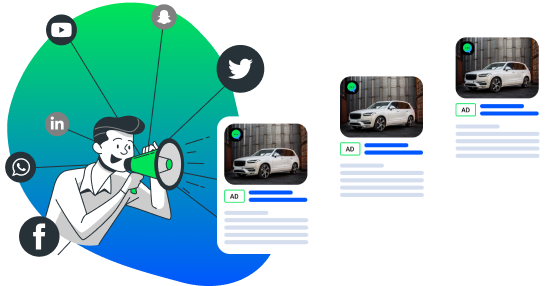
Car buyers can reach your dealership from many places.

They may submit an inquiry through your website, respond to a social media campaign, call the showroom, use a third-party automotive marketplace or reconnect after a previous conversation.

Generating the lead is only the beginning.

Dealerships still need a clear process for ownership, response, follow-up and appointments. Strong lead management helps keep those opportunities moving instead of allowing them to disappear between systems or staff.

Common breakdowns include:

  • New leads sitting without a response
  • Salespeople missing follow-up
  • Customer conversations spread across different tools
  • Several employees contacting the same customer
  • Older prospects disappearing into the database
  • Appointment details becoming disconnected from the lead
  • Managers having limited visibility into customer activity

A CRM should make these processes easier to manage, not create another system for employees to maintain.

Automotive CRM Features for Dealership Sales

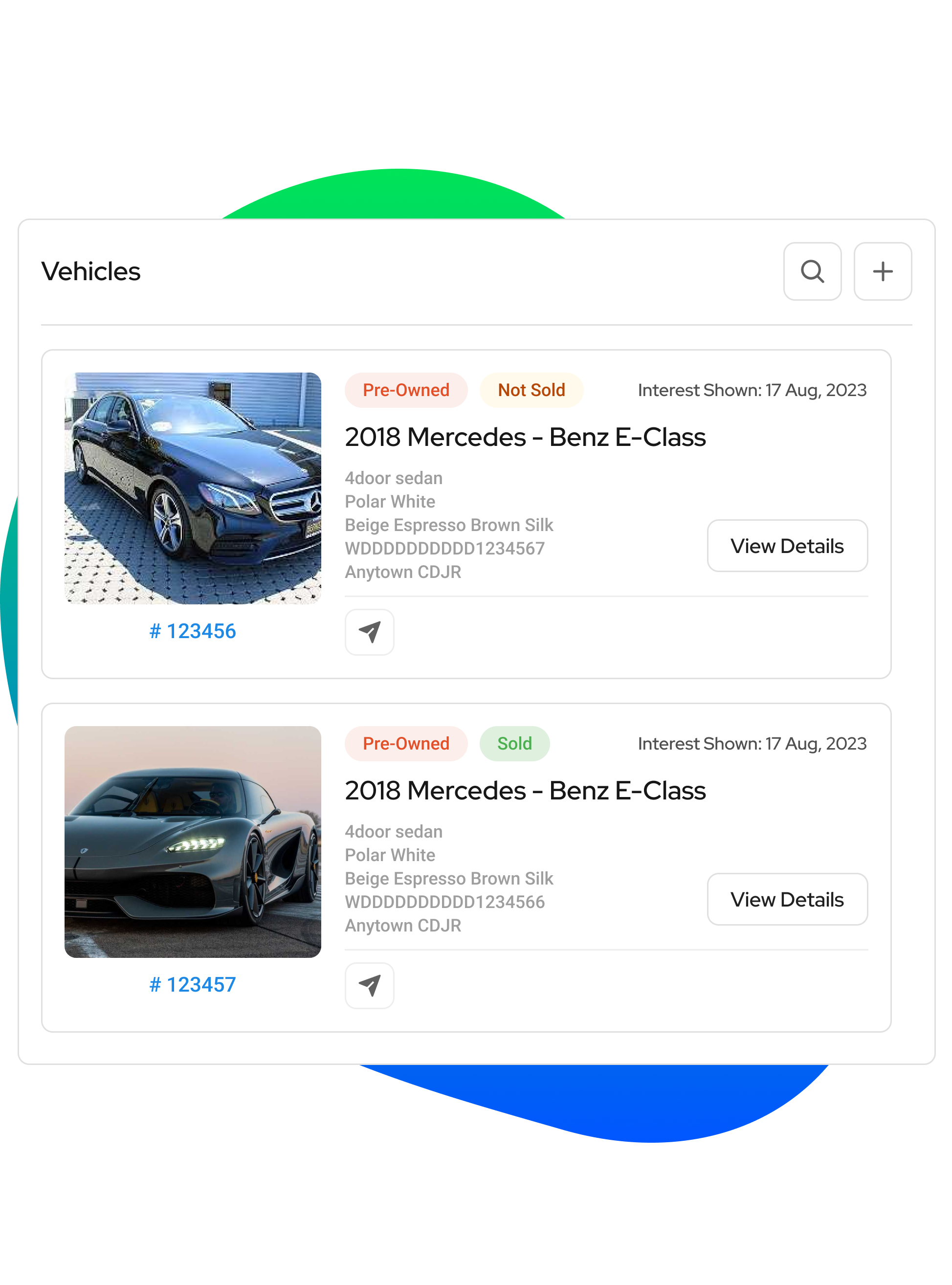
Multi-Source Lead Capture

Dealership opportunities rarely come from one source.

Leads may arrive through dealership websites, digital advertising, social platforms, automotive marketplaces and other providers.

A CRM should help bring those opportunities into a clear workflow so teams can see where each lead came from, who owns it and what should happen next.

The goal is to reduce the number of inquiries sitting across separate inboxes, spreadsheets and platforms.

Automotive Lead Management

Capturing customer information is not enough.

Your team needs to know:

  • Who owns the opportunity
  • Where the lead originated
  • Which vehicle the customer is interested in
  • What conversations have already happened
  • Whether follow-up is due
  • Whether an appointment has been booked
  • What the next action should be

SimpSocial connects customer activity with dealership sales workflows so sales and BDC teams can manage opportunities from the first inquiry through appointment and sale.

Automated Lead Follow-Up

Not every shopper responds after the first conversation.

Some are comparing vehicles. Others may be waiting for financing, a trade-in decision, new inventory or simply the right time to buy.

That makes consistent follow-up an important part of dealership CRM.

Automation can support follow-up for:

  • New leads
  • Unresponsive prospects
  • Appointment confirmations
  • Appointment reminders
  • Missed appointments
  • Unsold showroom visitors
  • Older CRM leads
  • Previous customers

Automation should support the sales process rather than overwhelm customers with repetitive messages.

The aim is to create a more consistent follow-up process while giving salespeople more time for conversations that need direct attention.

SMS, Email and Calling

Customers do not all want to communicate the same way.

One shopper may prefer text. Another may respond better to a phone call or email.

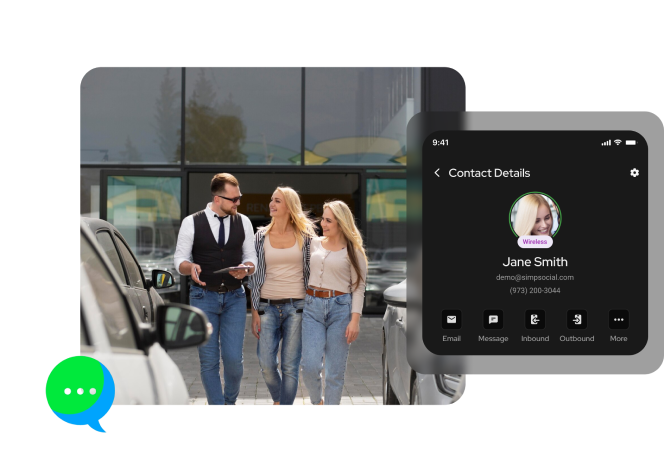
A dealership CRM should help employees understand what has already happened across those conversations instead of treating every channel as a separate interaction.

Connected communication gives the next employee more context before continuing the conversation.

AI Lead Engagement

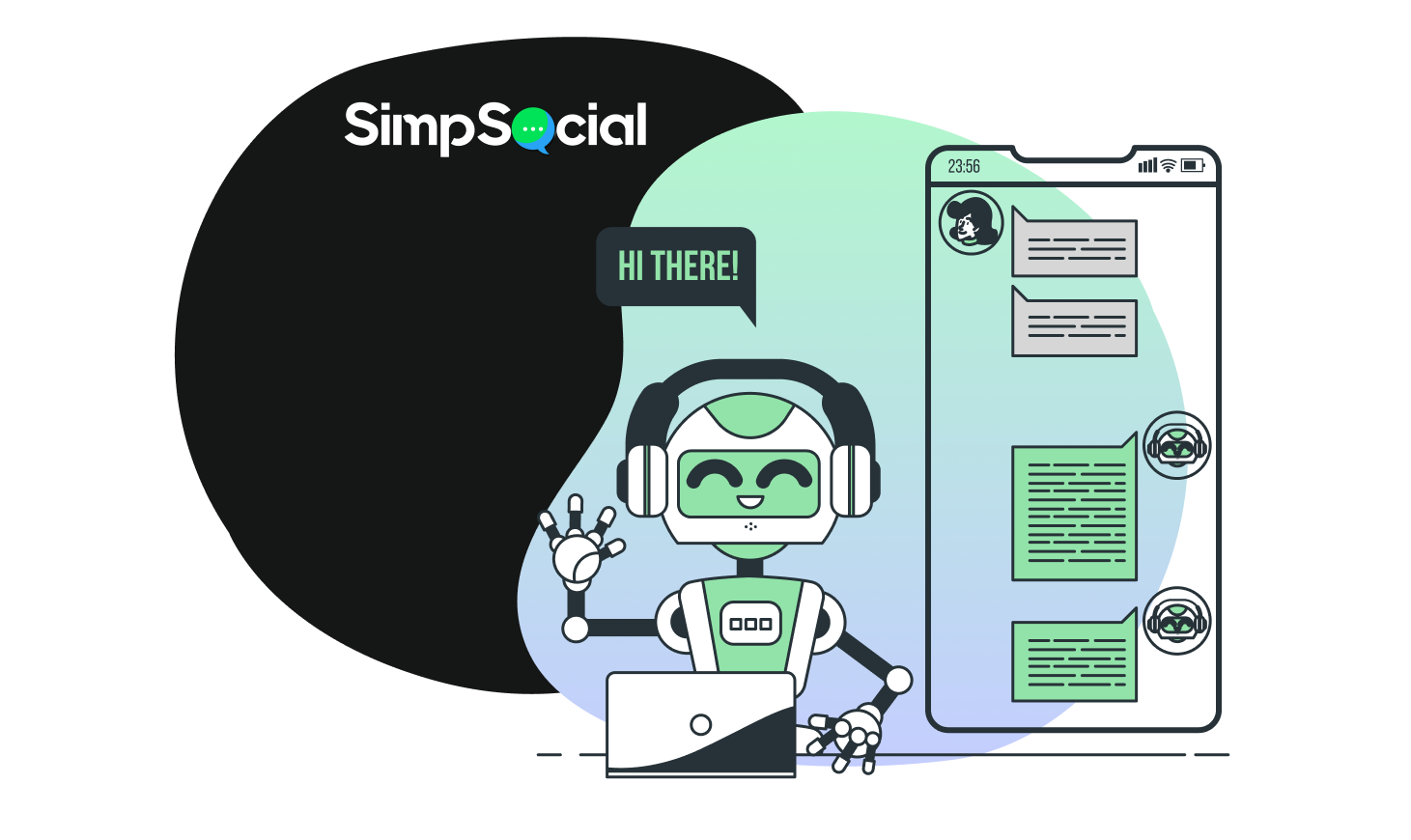
AI can help maintain customer engagement when leads arrive after hours or when dealership employees are handling other conversations.

It can support tasks such as:

  • Initial lead engagement
  • Routine customer questions
  • Follow-up
  • Lead nurturing
  • Older lead reactivation
  • Appointment conversations
  • Customer handoffs

The aim is not to remove salespeople from the process. AI can handle repetitive parts of engagement while dealership staff step in when the conversation requires human judgment.

For dealerships that want AI to do more than trigger basic workflows, SimpSocial also has a dedicated AI automotive CRM focused on automated engagement, follow-up and customer conversations.

Appointment Scheduling

Customer conversations should lead somewhere.

For many dealership leads, the next useful step is a test drive, showroom visit, sales call or other appointment.

A connected process can look like this:

Lead captured → conversation started → customer qualified → appointment booked → reminder sent → showroom visit → follow-up

Keeping appointments connected to the customer record gives employees more context when the shopper takes the next step.

BDC Workflow Automation

BDC teams often manage large numbers of leads across several sources.

Manual processes make it harder to respond, follow up and maintain consistent communication with every opportunity.

CRM automation can support:

  • New lead workflows
  • Lead nurturing
  • Appointment follow-up
  • Missed appointment outreach
  • Older lead reactivation
  • Customer engagement campaigns

This allows representatives to spend more time on conversations that require direct attention while managers maintain visibility into the wider pipeline.

Sales Calling

Calling remains an important part of dealership sales.

A connected calling workflow can help salespeople spend less time moving between customer records, call lists and separate systems.

Call activity is more useful when it remains connected to the customer’s wider CRM history, including previous messages, appointments and follow-up.

Database Reactivation

Your dealership’s existing database may contain thousands of previous opportunities.

These can include:

  • Unsold leads
  • Previous inquiries
  • Missed appointments
  • Past customers
  • Customers who stopped responding

Those contacts should not automatically be considered permanently lost.

CRM workflows can help dealerships identify appropriate segments and reconnect when there is a relevant reason to restart the conversation.

The goal is not to message everyone in the database. It is to use existing customer information more effectively.

How Automotive CRM Supports the Dealership Lead Journey

A dealership CRM should support more than record keeping.

1. Capture the opportunity

A shopper enters through your website, advertising, marketplace, phone or another lead source.

2. Organize customer information

The CRM keeps useful information such as contact details, lead source, vehicle interest and previous activity together.

3. Engage the customer

Your team starts the conversation while interest is active. Automation and AI can help when an employee is not immediately available.

4. Maintain follow-up

The CRM helps prevent longer-term opportunities from disappearing simply because a customer was not ready after the first interaction.

5. Book the next step

Interested shoppers can move toward a test drive, showroom visit, sales call or another useful action.

6. Give staff the right context

Salespeople can see relevant customer history before continuing the conversation.

7. Re-engage when appropriate

Older opportunities can return to the sales process when timing, inventory or customer needs change.

Automotive CRM Features to Compare

Not every dealership needs exactly the same CRM setup.

Before choosing a platform, consider which capabilities matter most to your operation.

Feature What to look for
Lead capture Support for the sources your dealership uses
Lead routing Clear ownership and assignment
Customer profiles A connected view of customer activity
Sales pipeline Visibility into active opportunities
Follow-up Manual and automated workflows
Communication SMS, email and calling
AI Useful customer engagement and workflow support
Appointments Booking and appointment tracking
Integrations Compatibility with dealership systems
Reporting Visibility into activity and progress
Database reactivation Ways to work older opportunities
Mobile access Ability to work away from a desk

The right feature mix will depend on your dealership’s workflow, lead sources and existing systems. We have also broken down the CRM features dealerships should compare when evaluating different platforms.

Automotive CRM vs. General CRM

A general CRM can manage contacts, opportunities, tasks and sales activity.

Automotive retail adds dealership-specific requirements.

Dealerships work with vehicle inquiries, automotive lead providers, showroom visits, BDC teams, appointment workflows and customer journeys that move between digital and in-person interactions.

General CRM Automotive CRM
General sales contacts Dealership customer records
Broad sales pipelines Automotive sales workflows
Standard communication Dealership customer engagement
General integrations Automotive lead and system connections
Standard appointment tools Dealership appointment workflows
Generic sales processes Vehicle and dealership-specific processes

The right system should fit the way your dealership actually sells rather than requiring teams to build every automotive workflow from scratch.

Traditional Automotive CRM vs. AI Automotive CRM

Traditional CRM systems are primarily designed to organize customer records, tasks and sales activity.

AI can add a more active engagement layer.

Instead of relying entirely on employees to complete each follow-up task, AI-supported workflows can help respond to leads, continue routine conversations and maintain engagement when dealership staff are unavailable.

That does not mean AI replaces CRM fundamentals or dealership employees.

A stronger approach combines:

CRM organization + automation + AI engagement + human sales conversations

The main difference is that traditional CRM usually tells employees what needs attention, while AI can help carry out parts of the engagement itself. Our comparison of traditional and AI-powered CRM looks at where each approach fits.

Automotive CRM Integrations

A CRM does not operate in isolation.

Dealerships may already use a DMS, existing CRM, website provider, automotive marketplaces, advertising platforms and other sales tools.

When these systems do not communicate, employees may need to move customer information manually or work from incomplete records.

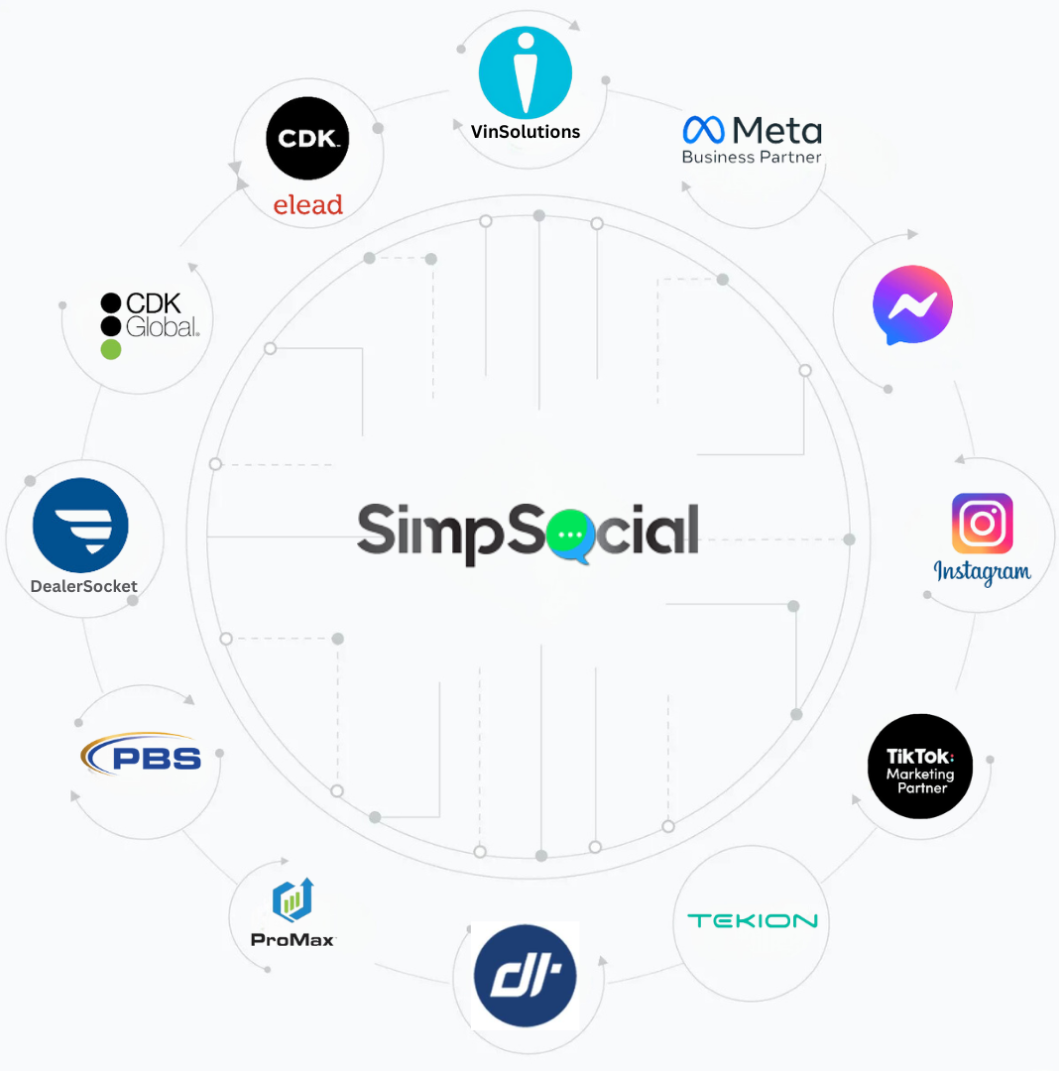
Before changing CRM or adding another sales tool, check whether it works with the systems your dealership already relies on. SimpSocial’s available integrations show the CRM, DMS and lead-source connections currently supported.

Integration should reduce gaps between systems rather than create another place employees need to check.

Automotive CRM for Different Dealership Teams

Franchise dealerships often manage high lead volumes from websites, OEM programs, marketplaces and advertising.

A connected CRM can help organize that activity and give managers clearer visibility into follow-up and appointments.

Independent dealers may benefit from combining CRM, communication, follow-up and sales activity without relying on a large stack of separate tools.

Dealer groups need consistent processes across locations while still giving each store visibility into its own opportunities and customer activity.

BDC teams can use automation to support repetitive outreach while representatives focus on active conversations and appointment conversion.

Managers need to understand who owns each opportunity, what has happened and where customer activity may be slowing down.

How to Choose Automotive CRM Software

Choosing CRM software should start with your dealership’s actual workflow rather than a long feature list.

A CRM should fit the channels that are already generating dealership opportunities.

Customer context becomes harder to maintain when texts, calls, emails and lead records sit in separate systems.

Look beyond simple task reminders. Determine which parts of the workflow the platform can actually help your team complete.

Confirm CRM, DMS and lead-source compatibility before changing systems.

Understand what the AI can handle, when dealership employees take over and whether previous conversation history stays available.

Reporting should help managers understand lead activity, follow-up, appointments and sales progress.

A CRM has limited value if the sales team finds it too difficult to use consistently.

It is worth comparing several platforms before making a decision, particularly if your dealership already has established CRM, DMS and lead-management workflows. Our automotive CRM comparison covers the main factors worth evaluating.

Why SimpSocial?

SimpSocial is designed around automotive sales and dealership customer engagement.

The platform brings customer information together with lead management, communication, automation, AI engagement and appointment-focused workflows.

This can help dealership teams:

  • Manage leads from multiple sources
  • Keep customer conversations organized
  • Create more consistent follow-up
  • Use AI to support lead engagement
  • Manage calls and messages
  • Move customers toward appointments
  • Re-engage older opportunities
  • Connect dealership systems
  • Give sales and BDC teams a shared workflow

A CRM should help employees work opportunities, not simply store them.

FAQs

Automotive CRM software is customer relationship management software designed for car dealerships. It helps dealerships manage customer information, leads, communication, follow-up, appointments and sales opportunities throughout the vehicle-buying journey.

A dealership CRM organizes customer activity from first inquiry through follow-up, appointment and sale. It can also give salespeople, BDC representatives and managers a shared view of each opportunity.

Automotive CRM software is built around dealership-specific processes such as vehicle inquiries, automotive lead sources, BDC workflows, showroom appointments and dealership system integrations.

Useful features can include lead capture, routing, customer profiles, pipeline management, messaging, calling, automated follow-up, appointment scheduling, AI engagement, reporting and integrations.

Yes. Depending on the platform, dealerships can automate parts of SMS, email, reminders, lead nurturing and other follow-up workflows.

Some automotive CRM systems integrate with DMS platforms, although compatibility differs by provider. Dealerships should confirm specific integrations before choosing a platform.

Yes, when the required integrations are available. Leads from websites, advertising platforms and automotive marketplaces can be brought into the dealership’s CRM workflow.

Yes. Dealerships can use customer segmentation and follow-up workflows to reconnect with older inquiries, unsold prospects and previous customers when appropriate.

An AI automotive CRM combines traditional customer and lead management with AI-supported engagement, automation and follow-up. AI can help with routine customer interactions while dealership employees handle conversations requiring direct involvement.

Turn More Dealership Leads into Sales Opportunities

Your dealership does not need another system that only stores customer information.

It needs a clear process for capturing opportunities, maintaining conversations, following up consistently and helping shoppers take the next step.

SimpSocial brings automotive CRM, lead management, communication, automation, AI engagement and appointment workflows together in one dealership-focused platform.

No leads were lost. reduced overhead.
Swipe to setup a demo
Swipe to learn more